There’s a Better Way to Send Your Mail

Northwest Arkansas’ Largest and Most Trusted Mailing Experts Since 1988
Getting mail processed and delivered accurately and quickly is our business. Mailing has become much more than just a matter of sticking a stamp on an envelope and dropping it in the “out” basket.
The complexity and increasing demands on the U.S. Postal Service (USPS) have generated an entirely new and ever-changing set of regulatory requirements along with escalating postage costs. We combine state of the art technology with our expertise in mail handling to produce fast, accurate delivery of your mail at a reduced cost to you.
Whether you have a high volume of daily mail or just an occasional project that requires bulk mailing, we are always available to assist in making your mail flow easily and accurately. From catalogs to postcards, monthly statements to periodicals…we can handle it all.
Mailing Services
 Print and Mail
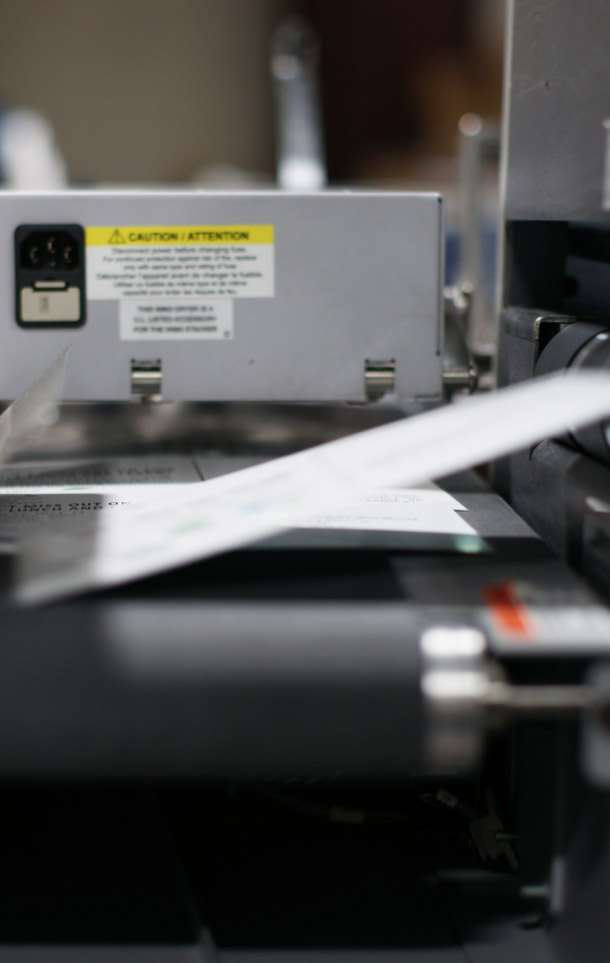
Outsourcing your printing and mailing ensures high-quality documents that effectively communicate with clients, resulting in increased response rates. With the right service, you can generate attention-grabbing marketing materials, invoices, and monthly statements, allowing you to focus on creating impactful pieces that serve as effective marketing and communication tools.

Presorting and Barcoding
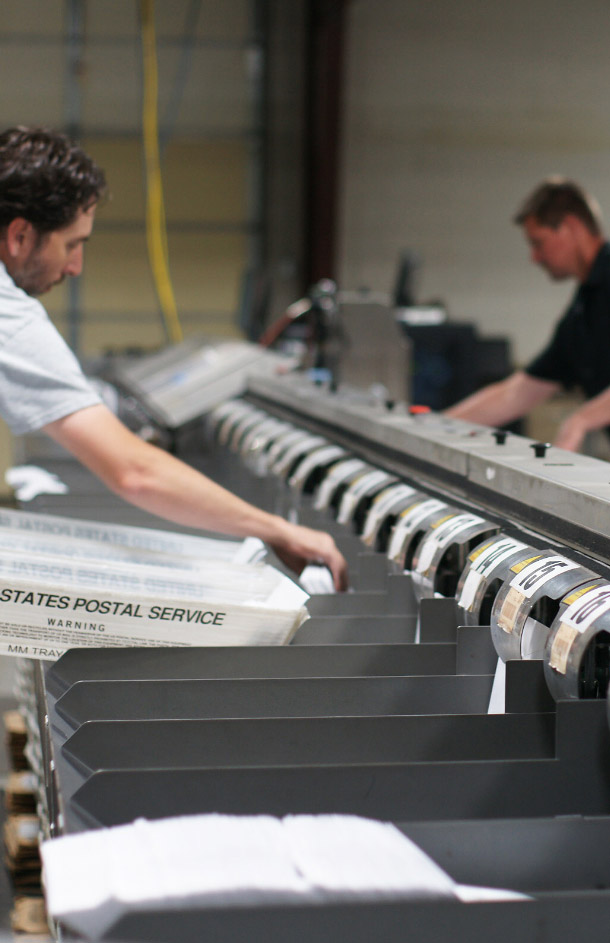
Our OCR/barcode equipment processes mail utilizing the most current USPS technology available. This machine is able to read handwritten as well as printed addresses and will reroute mail with a USPS address correction to the proper destination. Our dual image printing and camera system correctly and efficiently barcode, sort, and track each letter or flat. Pickup and same-day processing of your daily mail is provided. MailCo USA runs 13 daily mail routes serving hundreds of customers across the region.

 Consulting
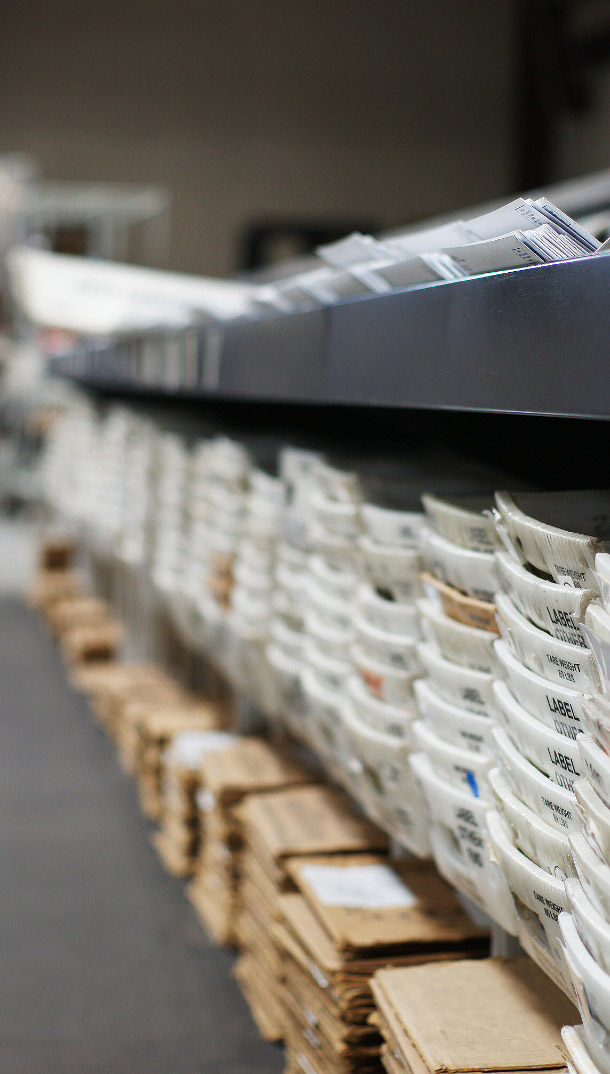
From designing mailpieces to targeting your audience, to verification and reporting, we are here to guide you every step of the way. We’ve been supporting our clients since 1988. With us on your team to give you information and guidance, you can make informed decisions and avoid costly mistakes, ultimately saving both time and money.
Additional Services
Why Choose Us

Integrity
Advanced barcode technology, proven processing and handling strategies ensure the integrity of your mailing.
Security
From your hands to ours to the USPS processing facility, your mail is continuously monitored and safe.
Delivery
Our presort services ensure your mail is barcoded, sorted, and trayed right to its destination before it ever reaches the USPS.

Flexibility
Whether you have a high volume of daily mail or just an occasional project that requires bulk mailing, we are always available to assist in making your mail flow easily and accurately.

Savings
We maximize postal discounts for all our customers, whether they have a few pieces or thousands. Save on letters, flats, marketing parcels, postcards, and more.

Success
You’ll benefit from our decades of postal experience, knowledge of rules and regulations and unique relationship with the USPS. We’ve in the mailing business since 1988. We know mail.
 Testimonials
We presented MailCo with a big challenge. We sent them a mail piece oversized and floppy with incorrect placement of the return address and indicia going to more than 5000 recipients. We needed it fixed and mailed as soon as possible as it was very time sensitive. Not only did they fix the problem and get it mailed expeditiously, but they also saved the University hundreds of dollars! Please congratulate the staff on a job well done and appreciated! Thank you and Long Live MailCo!
You’re wonderful! Thanks, Kathy. We sure appreciate you and your team at MailCo!
The WCAS Volunteer Team sends out a big THANK YOU to MailCo USA for their help throughout the years. The quality of their work matches the professionalism and kindness of their employees. We’ve experienced constant satisfaction with MailCo USA being our go-to printers. They have gone over and above to help the WCAS Volunteer achieve their goals in helping the Washington County Animal Shelter. We wouldn’t go anywhere else for our printing needs.
There are not enough adjectives to describe Kathy Ferguson and the team at MailCo! I’ve known Kathy since my days of working for the Arkansas Razorback Athletic Department. I’ve consistently used her services since 2017, when I moved back to my hometown of Fort Smith, to run the Good Samaritan Clinic. We send out 4 direct mail products each year; she and her team are top-notch from start to finish! Their pick-up, delivery and process is effortless, streamlined and 150% quality all the time. Non-profits often think direct mailing is too expensive, but Kathy and the MailCo team have taken the worry and stress out of direct mailing! You can’t afford NOT to use them! Thank you MailCo for all you do for Good Sam and so many other non-profits in our region! #youaregoodsam!
I have had the pleasure of partnering with MailCo for 18 years with the University of Arkansas. MailCo is absolutely the best! They have assisted multiple departments with all our mailing needs. They go above and beyond to be helpful and responsive to all our requests. When we ask for something extra or out of the ordinary, they never hesitate! I can’t imagine the negative effect that would befall the University’s mail processing without MailCo!
MailCo is an incredible resource for our community. Their wide range of printing and mailing capabilities, decades of experience, and ability to scale are unmatched in our region-not to mention just being lovely human beings to work with. They’ve helped us build our audience and support since our earliest years. We couldn’t be more grateful and satisfied with our partnership.
The Northwest Arkansas Naturals have used MailCo for over a decade and can’t say enough positive things about their services. They are professional, prompt, and ensure our mail needs are fulfilled in the best way possible. We highly recommend!